
Constant Time Theory (CTT)
If reality is renewed moment by moment, then personal identity cannot be a substance that persists unchanged through time. Nor can it be an immaterial essence that drifts along a temporal line. Instead, identity must be something that survives across renewal — a pattern that is stable enough to be re-instantiated with each new moment of existence.
CTT treats identity not as a thing, but as a continuity of structure within the temporal field.
Identity as Pattern Continuity
You are not a continuous stream of matter. Atoms flow through your body, cells are replaced, molecules shift, and even neural components change over time. In a renewing universe, nothing material survives from one moment to the next.
What persists is pattern:
the organisation of your brain,
the architecture of your memories,
the tendencies of your thoughts,
the habits you embody,
the character traits shaped by a lifetime of renewal.
Identity is the stable configuration of Θ_S (structure) that is recreated across successive moments.
Why Identity Feels Continuous
Even though the universe is re-instantiated at the Planck-scale tempo, identity feels seamless and continuous. This is because:
the structural pattern is largely stable,
renewal faithfully preserves the pattern,
memory provides informational coherence,
consciousness experiences each moment within the same universal now.
Continuity is not the persistence of matter; it is the persistence of form.
Just as a flame maintains its shape even though the fuel constantly changes, the self retains its identity even though the physical constituents are continually renewed.
Identity and Change
Identity does not imply rigidity.
Patterns evolve:
new memories form,
habits strengthen or weaken,
beliefs shift,
personalities develop.
In CTT, change is not a threat to identity; it is part of the identity’s evolution. Renewal ensures that structures remain stable enough to persist, yet flexible enough to adapt.
A self that cannot change is not stable — it is brittle.
A self that changes only and never stabilises is incoherent — it is chaotic. True identity lies in the balance between stability and adaptation across renewal.
No Need for a Timeless Soul
Many philosophical and religious traditions posit an immaterial soul to explain the continuity of the self. CTT provides a more straightforward explanation: continuity arises from the stability of patterns within the temporal field.
There is no need to assume:
a metaphysical entity travelling through time,
a hidden repository of identity,
or an immaterial observer separate from physical processes.
The self is authentic and meaningful not because it exists outside time but because renewal preserves structure within time.
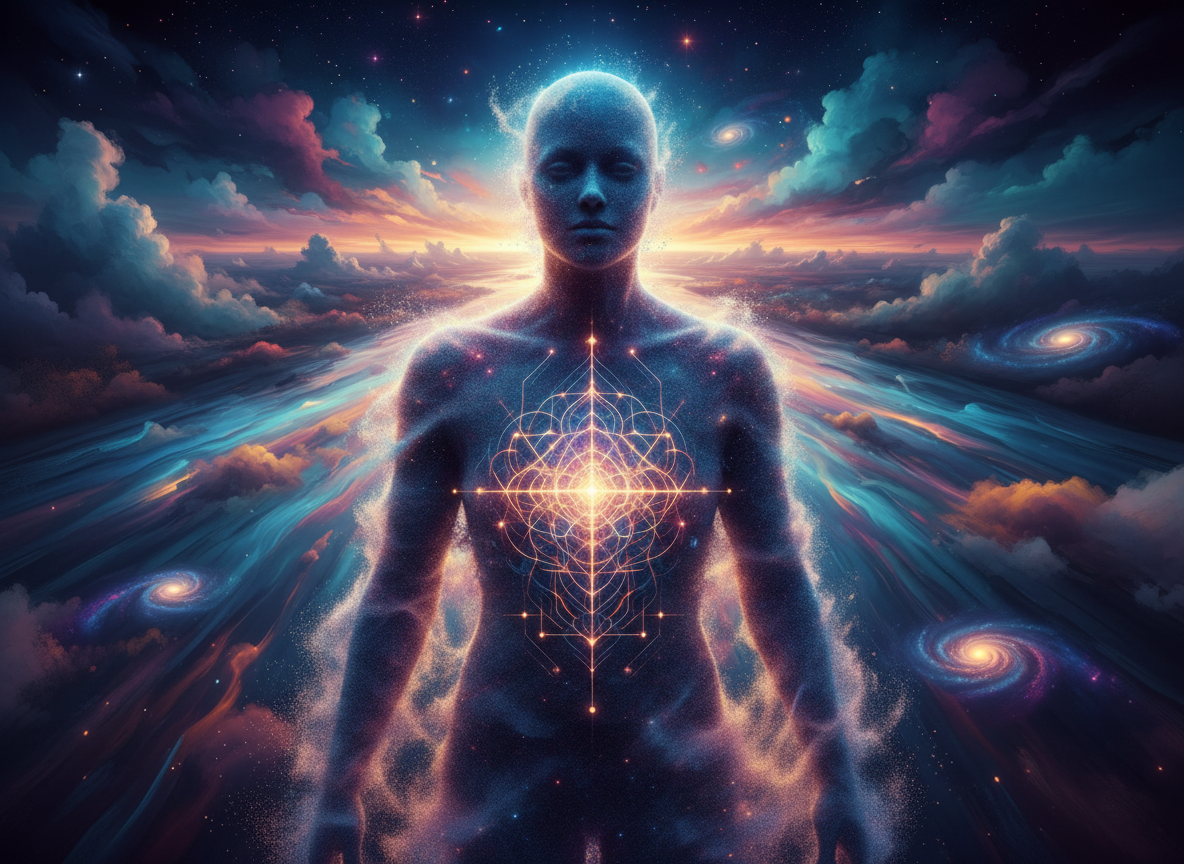
Personal Identity as a Creative Process
Identity is not a static possession; it is something continuously created and re-created. With each renewal, patterns are reinforced, updated, or altered according to:
your decisions,
your experiences,
your values,
your intentions,
the memories you emphasise,
the habits you practise.
In this sense, identity is not merely inherited or found — it is made.
You are not a fixed being walking through time.
You are a dynamic pattern shaped by time, continually participating in your own becoming.
Identity in a Present-Only Universe
If only the present exists, then identity is not a link to a past that remains somewhere. The past is gone. Your identity persists because it is encoded in the present configuration of your structure.
Identity is not a trail behind you; it is the pattern expressed now.
A present-only universe does not diminish the reality of selfhood. It makes it more immediate, more dynamic, and more intimately tied to the unfolding of renewal.
The Self as an Expression of the Temporal Field
Ultimately, CTT views personal identity as:
a structured expression of Θ_S,
sustained by the continual action of Θ_E,
experienced through consciousness,
evolving through decision and interaction,
and existing entirely within the renewing present.
Who you are is the pattern the temporal field consistently recreates.
Your identity is not something that persists through time —
It is something that time continually sustains.