
Constant Time Theory (CTT)
In most philosophical and scientific traditions, knowledge is described as a relationship between a mind and a world that exists in the past. We speak of “remembering” events, “learning” from history, and “understanding” what has already happened.
But if only the present exists, as CTT insists, then knowledge cannot be a connection to a past that persists somewhere. The past has dissolved. What remains is the structure of the present.
Knowledge is therefore not a link to something that still exists. It is an engagement with patterns preserved in the structuring mode of the temporal field (Θ_S).
Knowledge as Present Information
Everything we know is encoded not in the past itself, but in present-moment patterns:
the organisation of the brain,
the configuration of neural pathways,
the physical marks on paper,
the arrangement of pixels on a screen,
the magnetic patterns on a hard drive.
These are all present structures, formed during previous renewal cycles but existing only now.
Thus, knowledge is:
the interpretation of stable patterns in Θ_S that were shaped by earlier states of reality.
Learning as Pattern Formation
Learning does not access a past world; it reshapes present structure.
When you learn something:
new neural pathways form,
existing ones strengthen or weaken,
connections reorganise,
stable patterns emerge that can persist across renewal.
Learning is the reconfiguration of the structural field within the brain.
From the perspective of CTT:
Learning is the act of shaping Θ_S so that renewal will re-instantiate a more informed structure in the next moment.
It is not about acquiring a piece of the past, but about reshaping the present so that future renewal carries richer information forward.
Memory as a Structural Echo
Memory often feels like a direct link to past experience, but in CTT, it is something subtly different:
Memory is a present-day configuration shaped by past renewals.
A memory is not stored “somewhere behind us.”
It is encoded in:
synaptic strengths,
cellular structures,
recurring activation patterns.
When you remember something, you are not inspecting a preserved past. You are activating a present pattern that was formed by past events but exists now.
Memory is present evidence of a past that no longer exists.
Why Memory Can Be Mistaken
Because memory is structural rather than archival, it can evolve, distort, or decay.
Structures weaken
Connections shift
Patterns interfere
Reconstruction varies with context
This explains why memory is both powerful and fallible. It persists only because it is stable enough to survive renewal — yet fragile enough to be reshaped.
CTT reframes memory not as a flawless recording, but as a living, renewing structure.
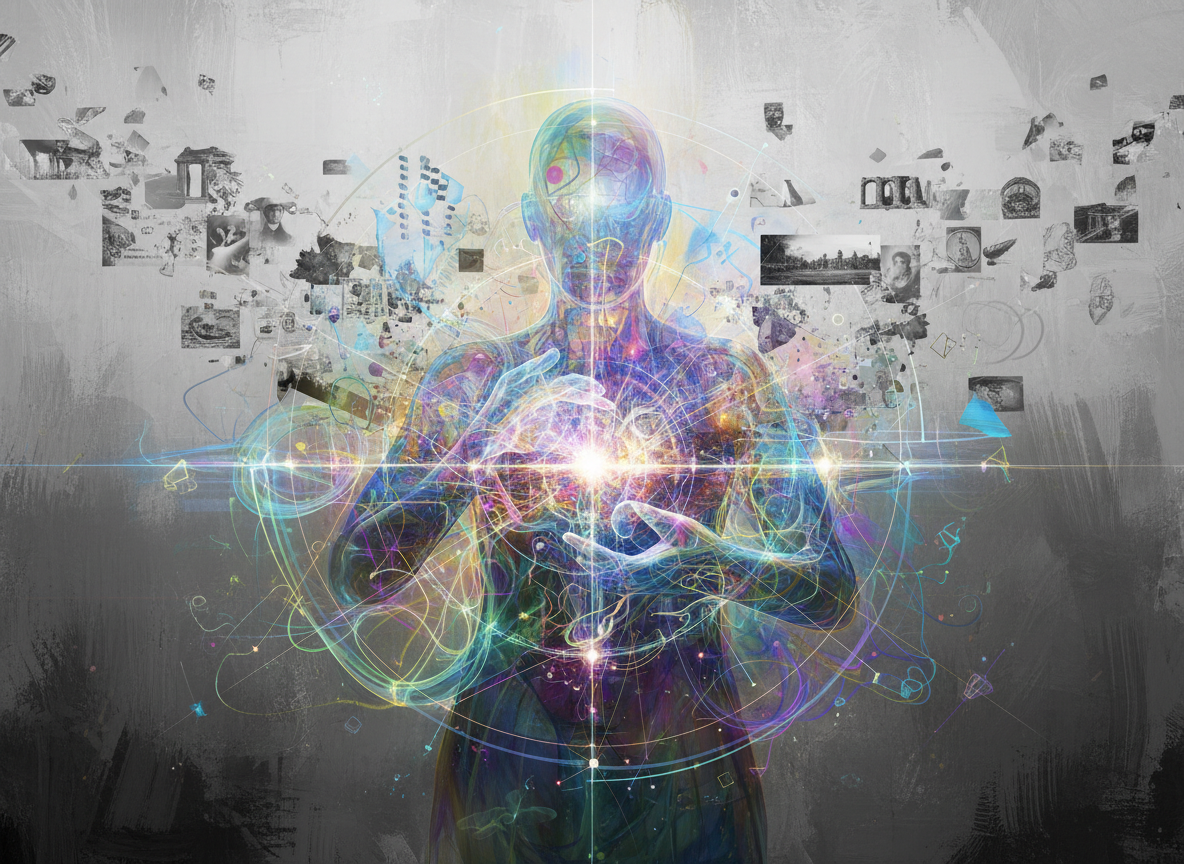
Knowledge Without a Surviving Past
Traditional epistemology asks:
How does the mind connect to the past?
How do we know what once was?
CTT dissolves the puzzle:
There is no past to connect to.
There is only the present.
Everything we “know of the past” is encoded in the structure of the present moment.
History is a present-day pattern of records.
Experience is a present-day pattern of neural structure. Scientific knowledge is a present-day pattern of models, measurements, and theories.
We know the past because the present contains traces of it.
Understanding as Prediction Within Renewal
To understand something is to recognise patterns that are stable enough to persist across renewal.
Science becomes:
the identification of patterns in Θ_S,
the modelling of how renewal propagates them,
and the prediction of how stable patterns evolve as renewal continues.
Understanding is the recognition of temporal stability.
Knowledge as Participation in the Present
In a renewing universe, knowledge is not passive.
It is participatory.
We shape what will be known by how we act.
We shape how we understand the world by how we structure our own minds.
We shape the future of knowledge by shaping the present patterns that renewal preserves.
Knowledge is not a window into a surviving past.
It is a tool for shaping the present reality that becomes the future.
A Clear Epistemology for a Present-Only Universe
CTT’s account of knowledge is simple and internally consistent:
The past does not exist.
Knowledge is encoded in present structures.
Learning reshapes those structures.
Memory is a stable pattern formed in past renewals but exists only now.
Understanding is the recognition of patterns stable enough to persist.
Knowledge is an active participation in how renewal unfolds.
In this framework, to know something is:
to engage with the present structure of reality, shaped by what has endured, and carried forward by renewal.