FAQs
-
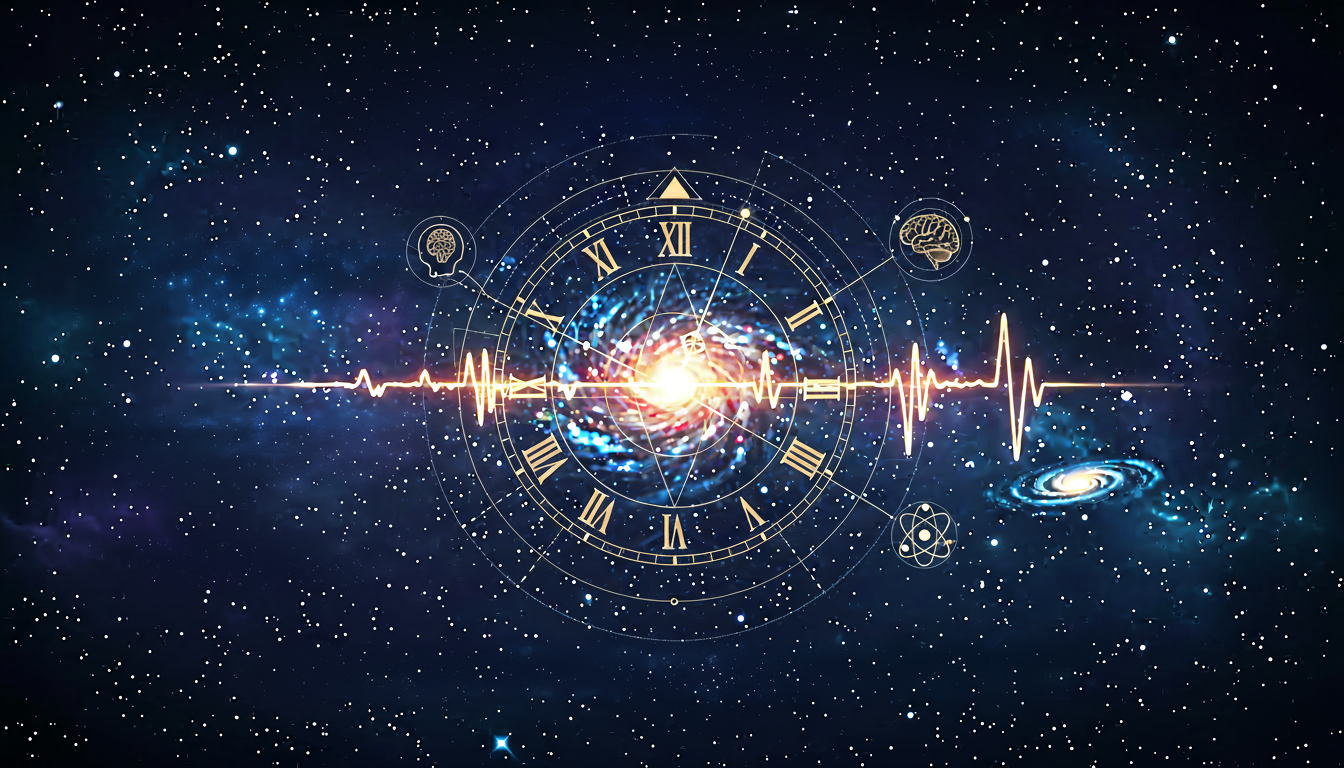
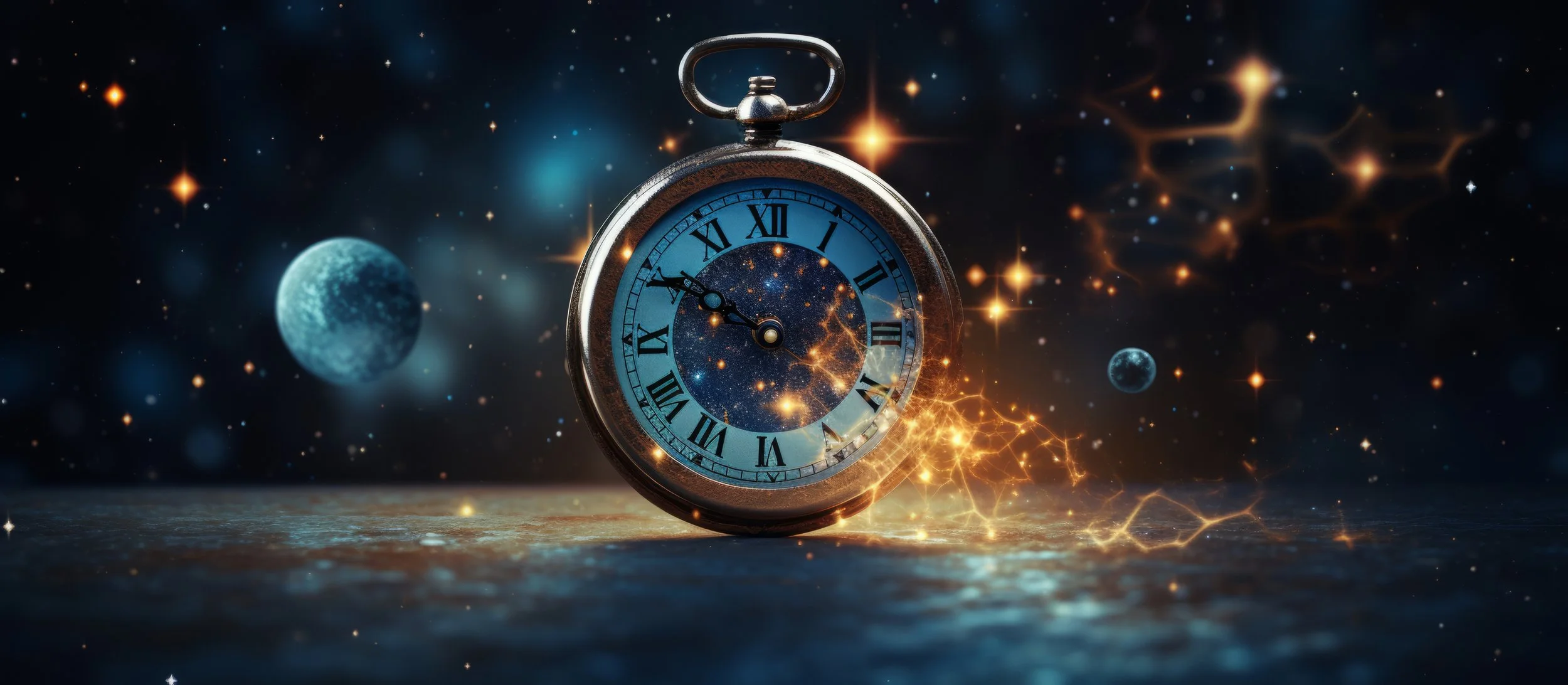
Constant Time Theory proposes that time is not a dimension we move through, but the fundamental field from which reality continuously arises. The universe does not persist by default—it is constantly renewed. What we experience as stability, motion, and causality emerges from this ongoing renewal of the present moment.
-
CTT sits at the boundary between physics and philosophy. It does not replace existing science, nor does it reject it. Instead, it offers a deeper explanatory framework—one that aims to clarify why time behaves as it does, and how meaning, structure, and continuity can exist without appealing to the supernatural.
-
No. CTT fully accepts the experimental successes of relativity and quantum physics. Where it differs is in interpretation. Rather than seeing time as relative or illusory, CTT proposes a universal present that is constantly renewed, while allowing individual experiences of time to vary due to motion, gravity, and structure.
-
Because our understanding of time shapes everything—from physics and cosmology to identity, memory, belief, and meaning. CTT offers a way to understand continuity without eternalism, purpose without design, and persistence without mysticism. It aims to provide a shared framework that can bridge scientific, philosophical, and cultural worldviews.
Understanding Time: Constant Time Theory
Welcome. If you’ve ever suspected that time might be doing more than just “passing,” you’re in the right place. Constant Time Theory proposes that the universe is renewed — not occasionally, but 1.85×10⁴³ times per second. Fortunately, this course moves at a far more comfortable pace. Together, we’ll explore the core ideas of CTT, why the present moment is all that truly exists, and how this perspective reshapes our understanding of physics, consciousness, and existence itself.
-
-
Summary
Constant Time Theory (CTT) starts with a bold but simple idea:
time is the fundamental field of reality.
Everything else—space, matter, energy, information, even consciousness—emerges from the way this field behaves.Constant Time Theory (CTT) starts with a bold but simple idea:
time is the fundamental field of reality.
Everything else—space, matter, energy, information, even consciousness—emerges from the way this field behaves. -
Postulates
These postulates are not assumptions, but necessary consequences.
If time is the fundamental field of reality, then existence must behave in certain ways. The statements that follow describe those behaviours in their simplest form. Individually they are modest; together they define the framework of Constant Time Theory and its view of reality as continuously renewed in the present.These postulates are not assumptions, but necessary consequences.
If time is the fundamental field of reality, then existence must behave in certain ways. The statements that follow describe those behaviours in their simplest form. Individually they are modest; together they define the framework of Constant Time Theory and its view of reality as continuously renewed in the present.
-
-
-
Toward a Deeper Understanding of Time
Before theories, equations, or measurements, there is experience.
This section steps back from formal models to consider time as it is lived, perceived, and understood. By examining how humans have related to time—through memory, change, and continuity—we begin to see why time feels fundamental, and why any account of reality must begin with it.Before theories, equations, or measurements, there is experience.
This section steps back from formal models to consider time as it is lived, perceived, and understood. By examining how humans have related to time—through memory, change, and continuity—we begin to see why time feels fundamental, and why any account of reality must begin with it. -
The Temporal Field
In Constant Time Theory, time is not a dimension through which reality moves, but the field from which it arises.
This section introduces the temporal field as the underlying substrate of existence—continually renewing the present and giving rise to structure, change, and persistence. From this perspective, space, matter, and causation emerge as expressions of time itself.In Constant Time Theory, time is not a dimension through which reality moves, but the field from which it arises.
This section introduces the temporal field as the underlying substrate of existence—continually renewing the present and giving rise to structure, change, and persistence. From this perspective, space, matter, and causation emerge as expressions of time itself. -
Why Renewal is Fundamental
Change cannot be explained by static existence.
If reality were simply continuous and unbroken, nothing genuinely new could occur. Constant Time Theory proposes renewal as the minimal mechanism that allows both change and persistence—enabling reality to update without collapsing into chaos or freezing into permanence. Renewal is not an added feature of time; it is what makes time real.Change cannot be explained by static existence.
If reality were simply continuous and unbroken, nothing genuinely new could occur. Constant Time Theory proposes renewal as the minimal mechanism that allows both change and persistence—enabling reality to update without collapsing into chaos or freezing into permanence. Renewal is not an added feature of time; it is what makes time real. -
The Renewal Frequency of the Universe
If reality is continuously renewed, that renewal must occur at a rate.
This section explores the idea that the universe updates at an extremely high but finite frequency, setting a fundamental limit on change, information transfer, and physical processes. Rather than being an abstract constant, this frequency defines the rhythm by which the present moment exists.If reality is continuously renewed, that renewal must occur at a rate.
This section explores the idea that the universe updates at an extremely high but finite frequency, setting a fundamental limit on change, information transfer, and physical processes. Rather than being an abstract constant, this frequency defines the rhythm by which the present moment exists. -
How Physical Effects Arise from the Temporal Field
Physical effects do not act upon time; they arise from it.
In Constant Time Theory, forces, particles, and motion emerge from the interaction between renewal and structure within the temporal field. This section shows how familiar physical behaviour can be understood as stable patterns formed and sustained through continual temporal renewal.Physical effects do not act upon time; they arise from it.
In Constant Time Theory, forces, particles, and motion emerge from the interaction between renewal and structure within the temporal field. This section shows how familiar physical behaviour can be understood as stable patterns formed and sustained through continual temporal renewal. -
Relativity, Minkowski Spacetime, and the Renewal Limit
Relativity describes how time is measured, not what time is.
This section revisits relativity and Minkowski spacetime through the lens of Constant Time Theory, introducing the renewal limit as a unifying constraint. From this view, relativistic effects emerge naturally from a single, renewing present rather than the absence of simultaneity itself.Relativity describes how time is measured, not what time is.
This section revisits relativity and Minkowski spacetime through the lens of Constant Time Theory, introducing the renewal limit as a unifying constraint. From this view, relativistic effects emerge naturally from a single, renewing present rather than the absence of simultaneity itself. -
The Big Bang as Transformation, Not Beginning
The Big Bang need not mark the beginning of time.
In Constant Time Theory, it is better understood as a transformation in how the universe expressed structure and renewal. This section reframes the Big Bang as a phase change within an already-existing temporal field, avoiding the paradoxes that arise when time itself is treated as having a starting point.The Big Bang need not mark the beginning of time.
In Constant Time Theory, it is better understood as a transformation in how the universe expressed structure and renewal. This section reframes the Big Bang as a phase change within an already-existing temporal field, avoiding the paradoxes that arise when time itself is treated as having a starting point. -
Consciousness and the Renewing Present
Consciousness is not something that exists within time; it is something that arises with it.
This section explores awareness as a structured process sustained across continual renewal, where perception, memory, and identity persist not as static entities, but as patterns repeatedly re-instantiated in the present moment.Consciousness is not something that exists within time; it is something that arises with it.
This section explores awareness as a structured process sustained across continual renewal, where perception, memory, and identity persist not as static entities, but as patterns repeatedly re-instantiated in the present moment. -
Personal Identity in a Renewing Universe
If reality renews, identity cannot be a fixed object.
This section examines personal identity as continuity of structure rather than permanence of substance. Memory, character, and selfhood persist because stable patterns are carried forward through renewal, allowing change without loss of self in a universe that is continually becoming.If reality renews, identity cannot be a fixed object.
This section examines personal identity as continuity of structure rather than permanence of substance. Memory, character, and selfhood persist because stable patterns are carried forward through renewal, allowing change without loss of self in a universe that is continually becoming. -
Free Will in a Renewing Universe
Free will is often framed as a conflict between freedom and determinism.
In a renewing universe, this opposition dissolves. This section explores choice as an emergent feature of structured renewal, where decisions arise in the present from enduring patterns, without requiring either absolute randomness or a fixed, predetermined future.Free will is often framed as a conflict between freedom and determinism.
In a renewing universe, this opposition dissolves. This section explores choice as an emergent feature of structured renewal, where decisions arise in the present from enduring patterns, without requiring either absolute randomness or a fixed, predetermined future. -
Ethics in a Renewing Universe
Ethics concerns how patterns are carried forward through time.
In a renewing universe, actions matter because they shape what persists. This section explores morality not as a set of imposed rules, but as the responsibility that arises when present choices influence the structures that endure across renewal, affecting others now and in the future.Ethics concerns how patterns are carried forward through time.
In a renewing universe, actions matter because they shape what persists. This section explores morality not as a set of imposed rules, but as the responsibility that arises when present choices influence the structures that endure across renewal, affecting others now and in the future. -
Knowledge in a Present-Only Universe
If only the present exists, knowledge cannot be stored in the past.
This section examines understanding as a living structure, continually re-instantiated through renewal. Memory, learning, and truth persist not as fixed records, but as stable patterns maintained in the present, allowing knowledge to endure without requiring a timeless archive.If only the present exists, knowledge cannot be stored in the past.
This section examines understanding as a living structure, continually re-instantiated through renewal. Memory, learning, and truth persist not as fixed records, but as stable patterns maintained in the present, allowing knowledge to endure without requiring a timeless archive. -
Related Work
No theory develops in isolation.
This section situates Constant Time Theory within the wider landscape of physics and philosophy, acknowledging ideas that resonate with, challenge, or inform its development. These works are not presented as authorities, but as part of an ongoing conversation about the nature of time, reality, and existence.No theory develops in isolation.
This section situates Constant Time Theory within the wider landscape of physics and philosophy, acknowledging ideas that resonate with, challenge, or inform its development. These works are not presented as authorities, but as part of an ongoing conversation about the nature of time, reality, and existence. -
Conclusion, Limitations & Glossary
Every framework clarifies some questions and leaves others open.
This final section summarises the core ideas of Constant Time Theory, addresses its current limitations, and acknowledges where further work is needed. The glossary that follows provides clear definitions to support careful reading and ongoing exploration.Every framework clarifies some questions and leaves others open.
This final section summarises the core ideas of Constant Time Theory, addresses its current limitations, and acknowledges where further work is needed. The glossary that follows provides clear definitions to support careful reading and ongoing exploration.
-
-
-
The Mathematics of CTT
Mathematics does not create reality; it describes its constraints.
This section introduces the mathematical language used to express Constant Time Theory, not as a complete formal system, but as a structured way to articulate renewal, limits, and persistence. The aim is clarity, not abstraction, grounding the theory’s ideas in measurable relationships.Mathematics does not create reality; it describes its constraints.
This section introduces the mathematical language used to express Constant Time Theory, not as a complete formal system, but as a structured way to articulate renewal, limits, and persistence. The aim is clarity, not abstraction, grounding the theory’s ideas in measurable relationships.
-
-
-
How a Temporal-Field Model of Reality Reinforces Biological Evolution
Evolution depends on continuity through change.
A temporal-field model of reality provides a natural foundation for this process, where structures that persist across renewal are favoured over those that do not. This section explores how variation, selection, and adaptation emerge naturally when life is understood as stable patterning within a continuously renewing present.Evolution depends on continuity through change.
A temporal-field model of reality provides a natural foundation for this process, where structures that persist across renewal are favoured over those that do not. This section explores how variation, selection, and adaptation emerge naturally when life is understood as stable patterning within a continuously renewing present.
-
-
-
Why Living Patterns Endure in a Universe That Rebuilds Itself
A universe that continually rebuilds itself does not erase life; it tests it.
Living systems endure because they form patterns stable enough to be carried forward through renewal. This section explores why life persists not in spite of constant rebuilding, but because renewal favours structures capable of maintaining coherence while adapting to change.A universe that continually rebuilds itself does not erase life; it tests it.
Living systems endure because they form patterns stable enough to be carried forward through renewal. This section explores why life persists not in spite of constant rebuilding, but because renewal favours structures capable of maintaining coherence while adapting to change.
-
-
-
CTT Consciousness
In CTT, consciousness is not a mysterious inner substance or detached “soul.”
Rather, it is:Enduring biological renewal with memory continuity in the present.
In CTT, consciousness is not a mysterious inner substance or detached “soul.”
Rather, it is:Enduring biological renewal with memory continuity in the present.
-
Carl Tregidgo
is an independent theorist and writer exploring time, meaning, and human responsibility outside traditional academic frameworks. His work seeks calm, non-dogmatic ways of understanding continuity and coexistence in the modern world.