
When time slows down
Experiencing More of the Present
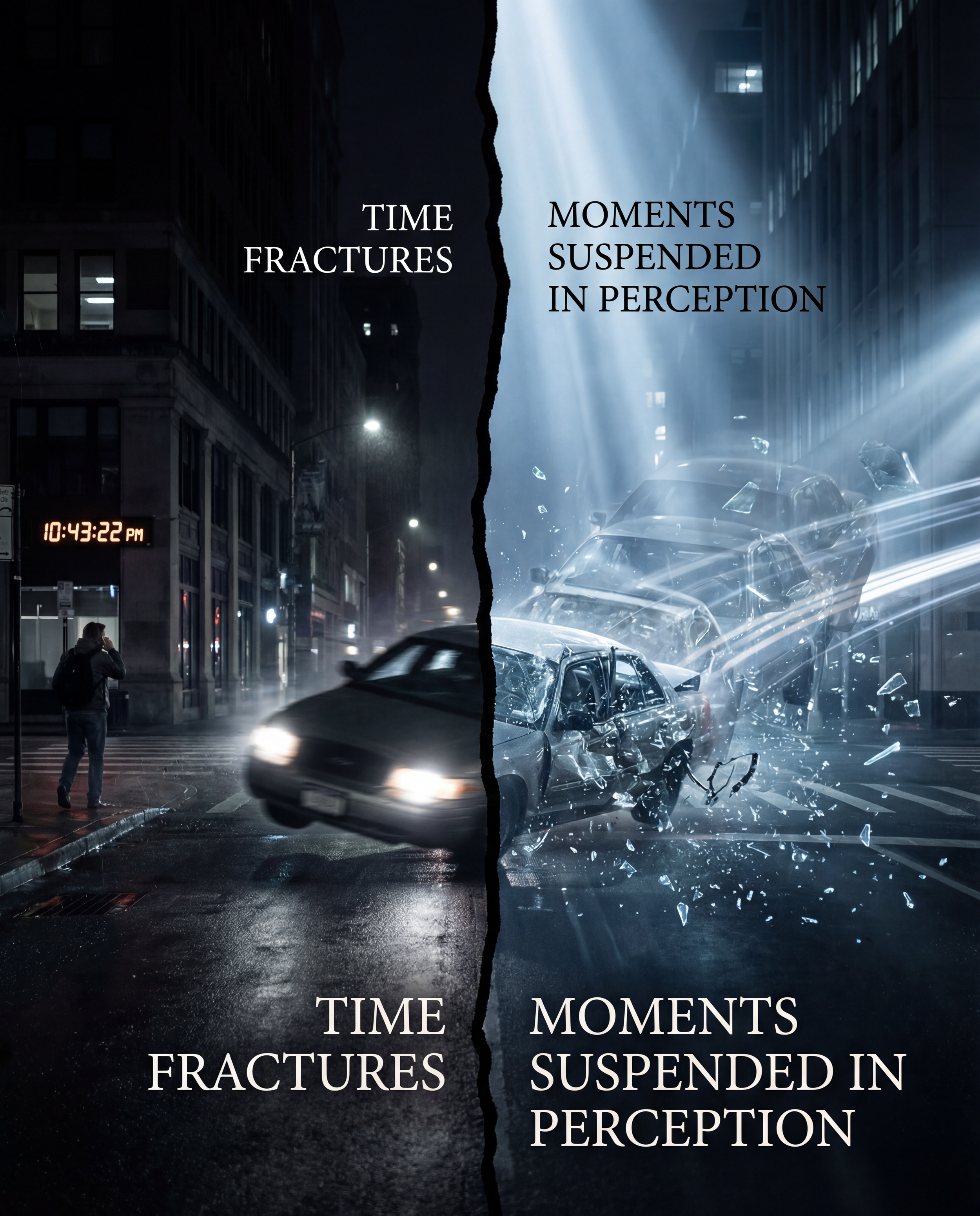
People often report that during moments of danger—such as a car accident or a fall—time seems to slow down. The outside world appears to move in slow motion while the mind races ahead. It can feel as if the universe itself briefly changed speed.
Physics tells us this cannot be the case. The flow of time does not suddenly slow during a road accident. The laws that govern clocks, motion, and causality remain unchanged.
So what is happening?
Constant Time Theory suggests a simple answer.
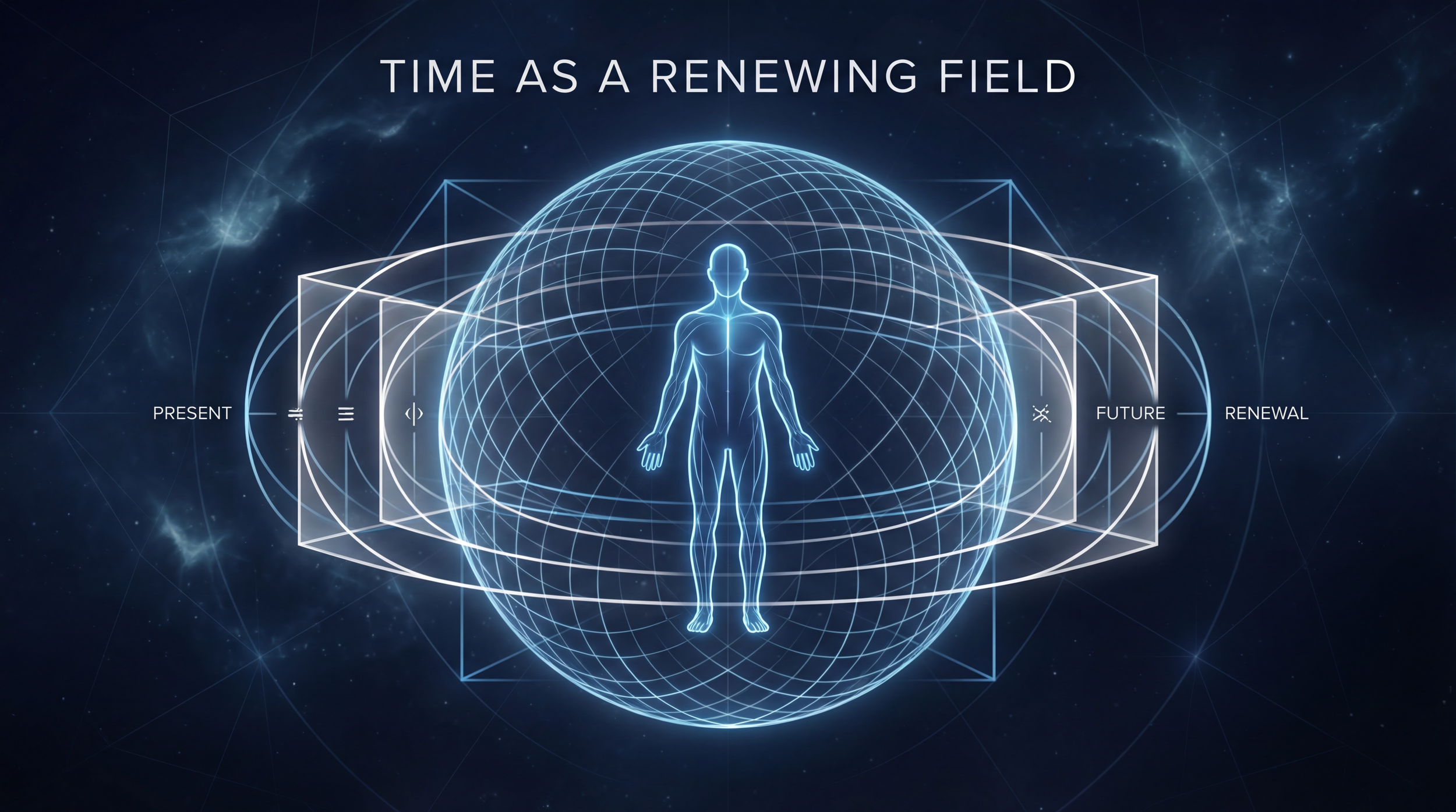
Reality renews continuously. Every physical system persists through this ongoing renewal, but biological systems—especially brains—do not process every renewal event individually. Instead, they integrate many renewals into perceptual intervals that we experience as moments.
Under normal circumstances the brain compresses large numbers of renewal events into a single perceptual frame. This keeps perception efficient and stable.
During extreme stress, however, the brain changes how it encodes events. Adrenaline and noradrenaline heighten attention and memory formation. More details are recorded and fewer events are filtered out.
In effect, the brain divides the same physical interval into more perceptual slices.
When the memory is later reconstructed, the increased number of encoded events gives the impression that more time must have passed. The moment feels longer, even though the external duration was unchanged.
From the perspective of Constant Time Theory, the universe did not slow down. Instead, the mind briefly resolved more of the renewing present.
This interpretation suggests that conscious experience is not a separate substance or mystical property. Rather, it is the way complex systems participate in the renewing structure of time. Some systems interact with that structure only passively, while biological brains can encode it in rich detail.
In moments of crisis, the brain simply samples the present more finely than usual.
Time does not slow.
We briefly experience more of it.